Cross-Border Trade Finance: Country Risks & Mitigation
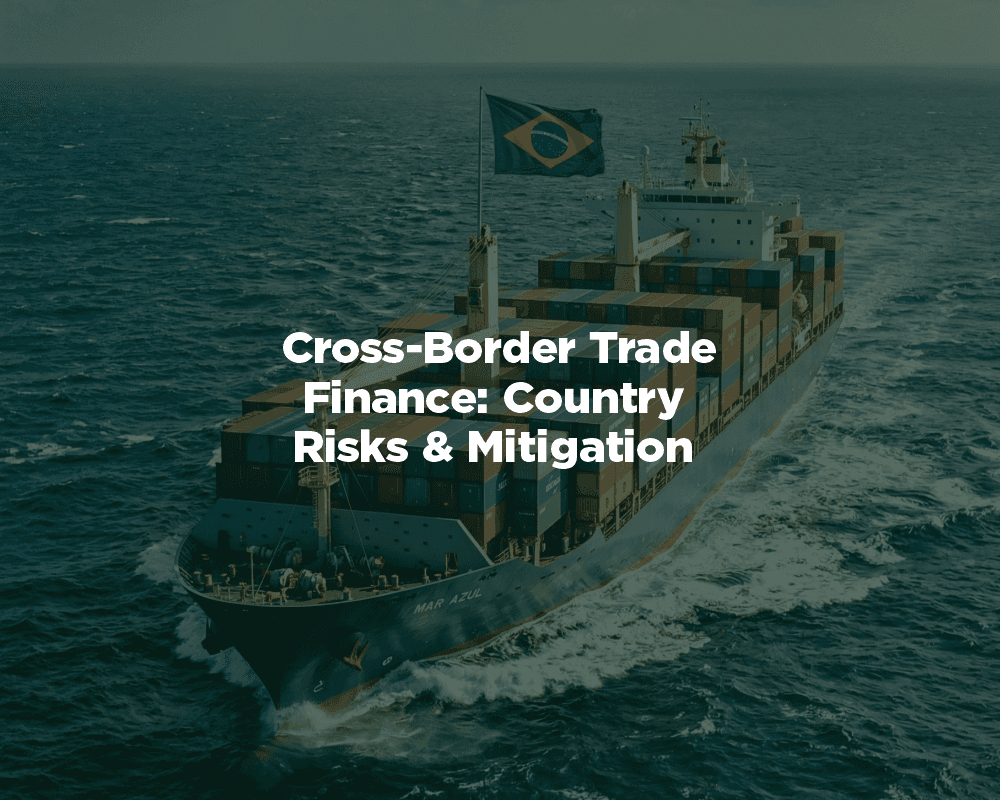
When structuring a cross-border trade finance transaction, understanding country risk is as important as assessing the borrower’s creditworthiness.
Key questions financiers ask include:
✔️ How stable is the political and legal environment?
✔️ Could there be risks of expropriation, sanctions, moratoria, or discriminatory regulation?
✔️ Are there risks of sudden legal or regulatory changes (“changing the rules mid-game”)?
✔️ How efficient and specialized is the judiciary?
✔️ What is the government’s stance on foreign capital and FX flows?
How country risk is assessed
To evaluate political and sovereign risk in a given jurisdiction, financiers rely on analyses prepared by specialized rating agencies such as Fitch Ratings, Moody’s Investors Service, and Standard & Poor’s. These agencies assign sovereign ratings based on present and future risk perceptions. Beyond ratings, financiers also consider government stability, leadership profiles, and corruption risks before committing capital to a market.
Why it matters
Even the most robust contracts cannot eliminate all political or institutional risks. However, comfort increases when exports are strategically important for a country’s economy, since governments are less likely to interfere with sectors that generate critical foreign currency revenues.
⚙️ Mechanisms of Mitigation
• Pre-export finance structures: shifting repayment risk from the local exporter to the foreign offtaker.
• SPVs abroad: segregating assets and receivables outside the exporter’s jurisdiction.
• Multilateral involvement / Export Credit Agencies: providing political backing and credit insurance.
• Contractual protections: treating regulatory or legal changes as events of default, with acceleration and compensation mechanisms.
• Due diligence: assessing sovereign ratings, corruption risks, and the strategic value of the export commodity.
Brazil Country Risk & Commodities Outlook
When analyzing country risk in cross-border trade finance, Brazil offers a unique mix of strengths and opportunities.
Allianz Trade (Jan 2025)
Strengths
A largely industrial and financially sophisticated economy, with a significant trade surplus.
Robust agricultural performance and strong energy production growth.
Record-low unemployment, improvements in education, and reduced poverty levels in recent years.
Opportunities
Rising debt levels open demand for innovative, long-term trade finance solutions.
Exposure to global commodity swings creates scope for hedging and structured risk management.
Fiscal discipline and reform momentum can boost market confidence and attract fresh capital.
Climate challenges in agribusiness drive green finance, sustainability-linked products, and resilient infrastructure investment.
High interest rates expand the case for alternative financing channels and international liquidity.
(Source: Allianz Trade Corporate – Country Report on Brazil)
Coface – Brazil Economic Studies
Strengths
Diverse mineral resources and a strong agricultural base.
Resilient exports contributing consistently to the trade balance.
Large domestic market offering scale and demand resilience.
Opportunities
Infrastructure gaps pave the way for major investment in logistics, ports, and supply-chain modernization.
High logistics costs accelerate the push toward digitalization and smart warehousing solutions.
Ongoing tax reform — consolidating five taxes into a single consumption levy (approved in 2023, advanced in 2024) — is set
to simplify Brazil’s business environment and improve competitiveness.
Structural constraints create entry points for strategic investors to partner in strengthening governance and boosting investment.
(Sources: Coface; Scribd – Brazil Economic Studies)
✅ Positive Takeaway
Brazil’s commodity base remains a strategic advantage for global markets. Financiers can mitigate risks and capture opportunities through:
Pre-export finance & SPVs – shifting payment risk offshore and protecting receivables.
Bonded warehousing regimes – securing financed products under customs control.
Multilateral/ECA support – adding political comfort and credit protection.
Targeted due diligence – focusing on climate, infrastructure, and regulatory exposure.
By proactively structuring around these risks, investors and financiers can transform Brazil’s vulnerabilities into opportunities for resilient, sustainable trade finance.
Understanding Brazil, working with trusted players, and leveraging solid market intelligence can turn risks into long-term opportunities and lasting growth stories. How do you see this unfolding across agribusiness, energy, and mining?